
Frequently Asked Questions
-
The term ceremonial-grade cacao is commonly used to describe cacao paste, often from Mesoamerica, that’s minimally processed, organically grown, and made in small batches using more traditional methods.
That said, there’s no single, agreed-upon definition of what “ceremonial-grade” means today.
You’ll see it used for cacao in paste or powder form, and for cacao grown and produced across many regions worldwide, like Bali, Trinidad, Sri Lanka, and Tanzania.
Because the term is used so broadly, its meaning can vary quite a bit depending on who’s using it.
-
This really depends on the effect you’re after, and your own sensitivity to stimulants.
Many people love cacao in the morning or early afternoon as a gentle alternative to coffee. Others prefer a smaller serving later in the day, as part of a calming evening ritual.
Because cacao contains theobromine and small amounts of caffeine, a late-night cup can affect sleep for some people. If you’re new to cacao, start with a morning cup, then see how your body responds and adjust your timing from there.
-
We love preparing ritual cacao with water or milk. Thanks to the natural cacao butter, it’s thick and luxurious even with hot water. If you want it extra rich and velvety, use your favourite milk; we love coconut or almond. Another favourite: make it with water, then finish with a splash of organic double cream.
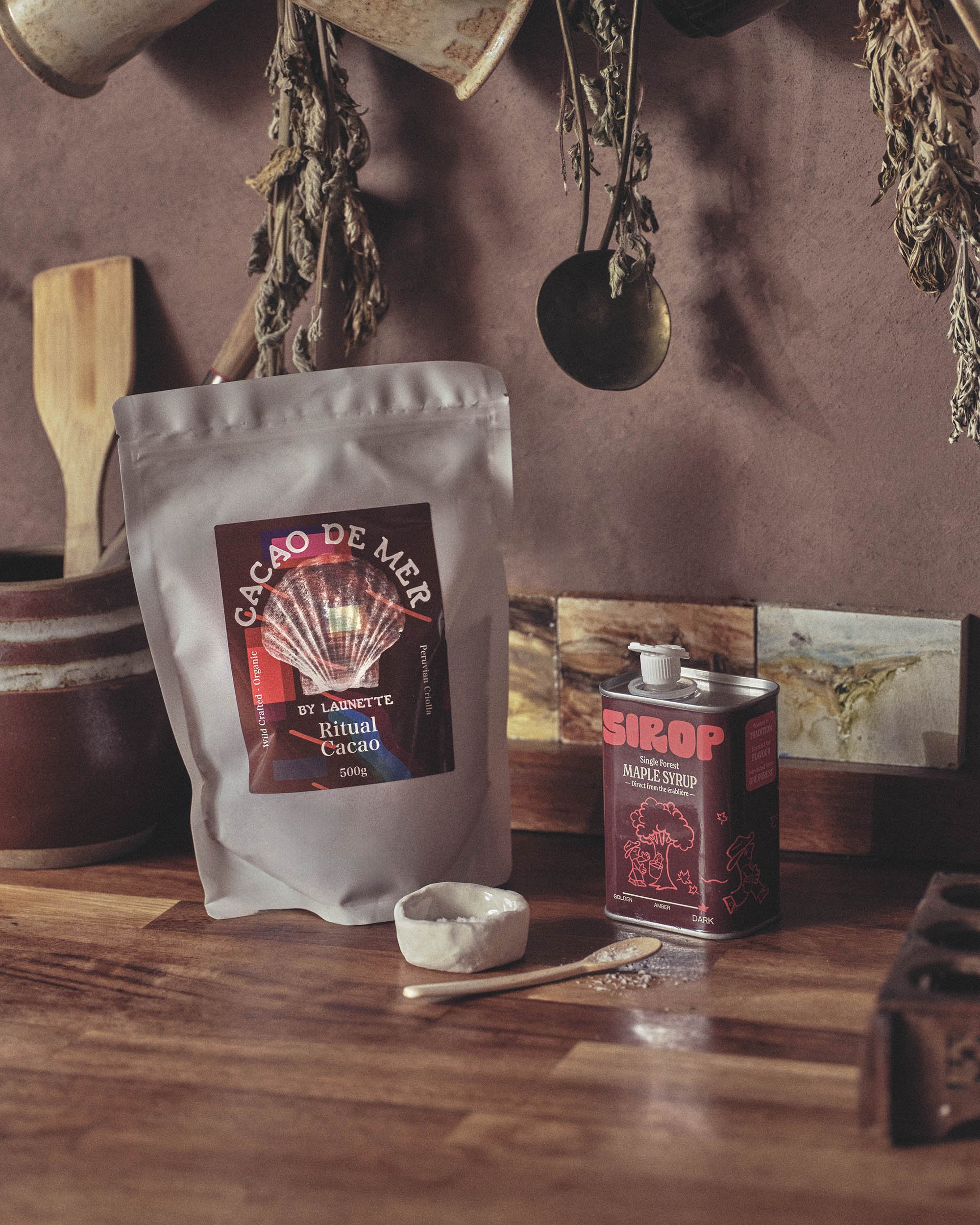
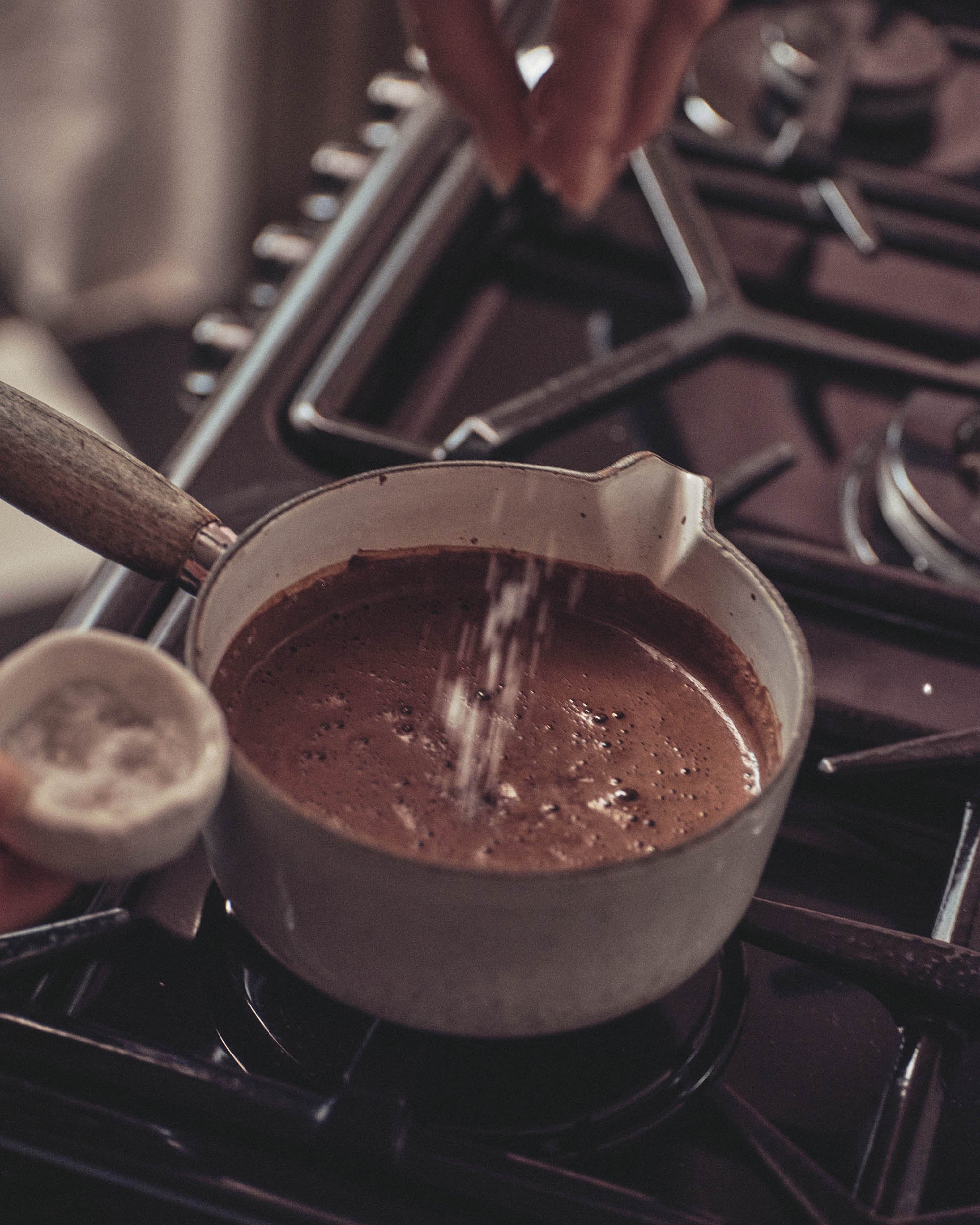
For sweetness, we like raw honey or maple syrup. You can also keep it simple with cinnamon. And a pinch of sea salt really brings the flavour to life.
Stovetop method
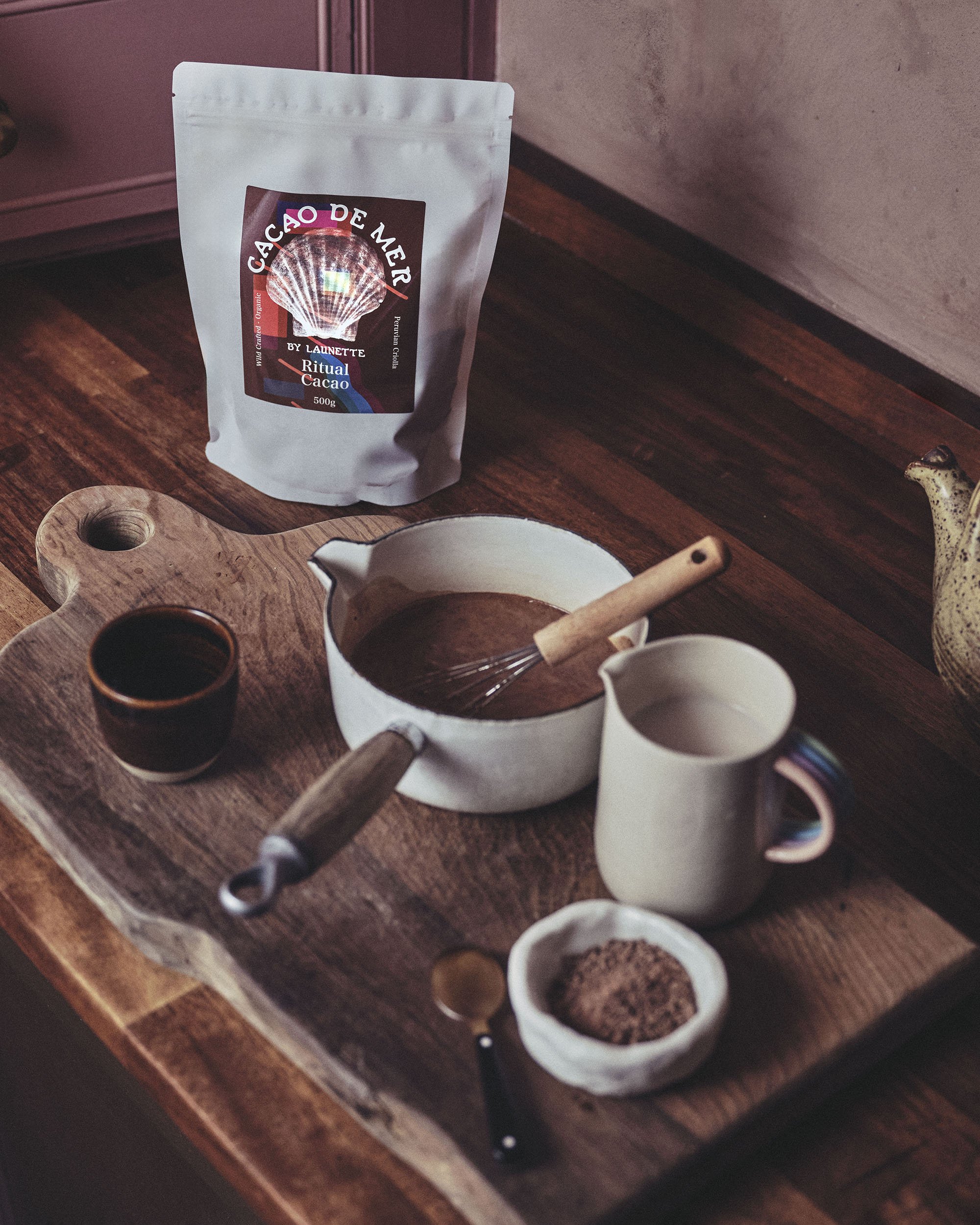
Add 20–40g of ritual cacao to a saucepan.
Pour in just enough warm water or milk to make a thick paste, whisking as you go.
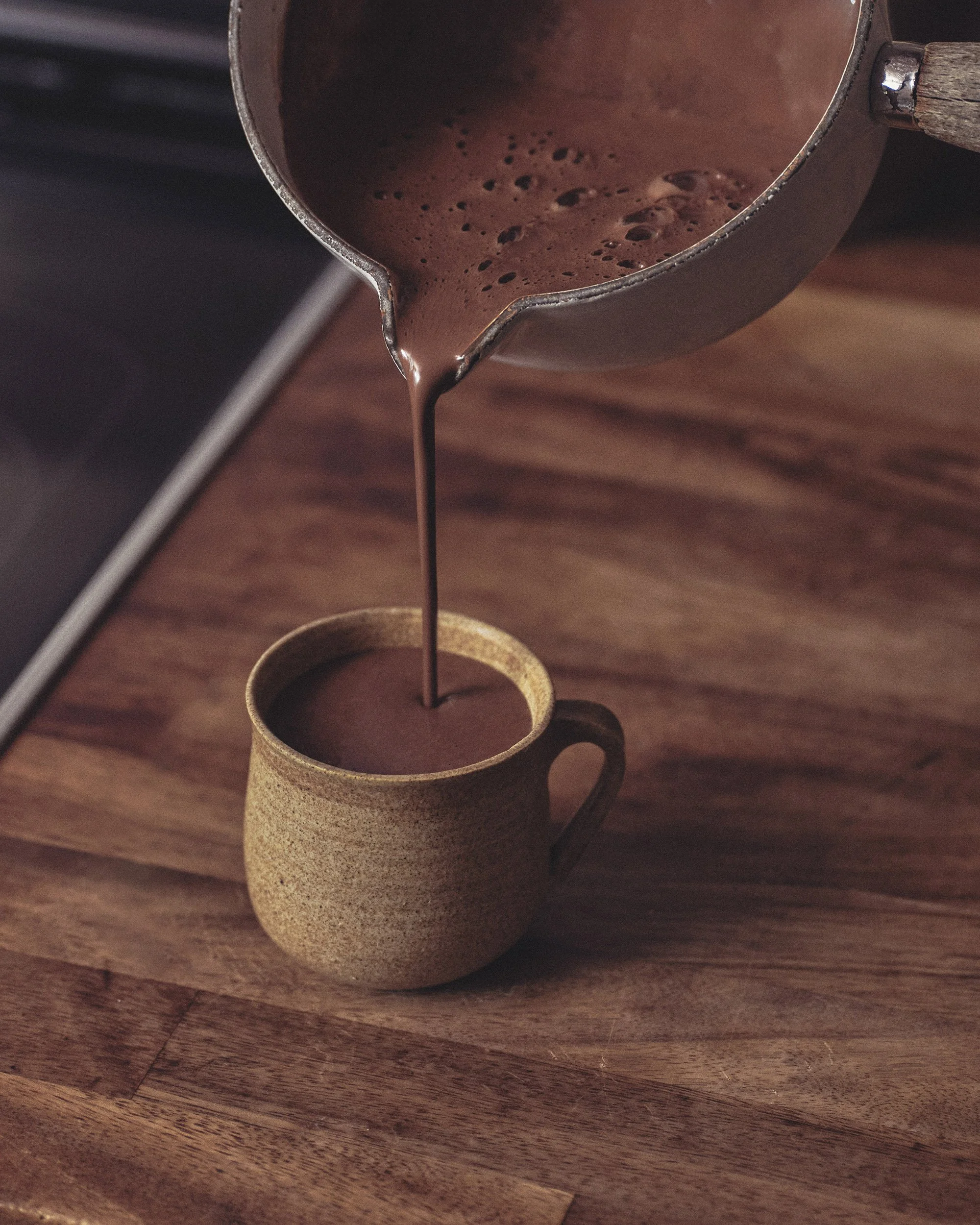
Slowly add the rest of your liquid, continuing to whisk over a gentle heat until it’s steaming, slightly bubbly, and at a comfortable drinking temperature.
Sweeten to taste (we usually add sweetener at the end).
Blender method
Warm your water or milk, then add it to a blender with your ritual cacao (plus any extras like cinnamon, honey, or a pinch of salt). Blend until smooth, frothy, and creamy.
-
Put simply, ritual cacao is hot chocolate, but made properly.
It’s prepared with whole-food ingredients, so you get a purer, more nutritious dose of chocolate. We make ours without refined sugar, using natural sweeteners like honey or maple instead. Most hot chocolates are made with cane sugar and either cocoa powder (often processed at high temperatures) or chocolate that can contain refined sugar and other additives.
Ritual cacao starts as organic, stone-ground cacao beans, blended into a smooth paste. That paste is pressed into blocks, which we grate into a fine, convenient texture for easy use.
Our Peruvian cacao is grown by small farmer co-operatives. We use the Criolla variety, often called “the king of cacao”, because it’s one of the oldest, non-hybrid varieties, known for its naturally complex flavours and aromas. It’s handled with minimal processing, using gentle fermentation and low temperatures (no roasting), to help preserve its purity and quality.
And honestly, ritual cacao feels more special, both in the slow, intentional preparation and in how it leaves you feeling afterwards.
-
We recommend starting with 20g per cup and gradually working your way up to 45g, depending on the kind of cup you want and how you feel afterwards.
As a general guide, 1–2 cups a day is a lovely balance for most people, but the real rule is to listen to your body. Start gently, notice how it lands (energy, mood, digestion, sleep), and adjust your amount or timing from there.
-
Many people choose to enjoy cacao during pregnancy and breastfeeding as a gentle, grounding ritual. We recommend approaching it with care and moderation during this time.
Cacao naturally contains theobromine and small amounts of caffeine. These mild stimulants can feel stronger during pregnancy and breastfeeding, so a smaller serving size is usually best.
Some people find cacao subtly uplifting or comforting when enjoyed mindfully as part of a regular ritual. Everyone’s experience is different, and any effects tend to be gentle rather than medicinal.
If you have any concerns or you’ve been advised to limit stimulants, it’s best to speak with your midwife, GP, or doctor.
-
When you choose a subscription, you will receive a fresh pouch of our Organic Ritual Cacao at the selected delivery interval.
Your payment method will be charged automatically at the start of each billing cycle. Once payment has been processed, your cacao will be prepared and dispatched.
Subscriptions renew automatically until cancelled, subject to the minimum subscription period described below.
-
Our subscriptions are designed to suit different cacao rituals.
150g Ritual Subscription
This option has a minimum commitment of three months. You will receive one pouch each month for three months. After the third delivery, the subscription will complete automatically.500g Ritual Subscription
This option also has a minimum commitment of three months. After the first three deliveries, the subscription continues as a rolling monthly subscription until cancelled. -
Yes.
Both subscription options require a minimum commitment of three billing cycles (three months).
• The 150g subscription completes automatically after the third delivery.
• The 500g subscription continues monthly after the initial three months until cancelled. -
For the 500g rolling subscription, you may cancel at any time after the initial three-month period, provided cancellation is made before the next billing date.
The 150g subscription runs for a fixed three-month period and will complete automatically after the third delivery.
If you require assistance managing your subscription, please contact us.
-
Subscription orders are typically prepared and dispatched within 2 working days after payment has been processed.
You will receive a shipping confirmation email once your order has been dispatched.
-
You can manage your subscription through your customer account on our website.
From your account you can:
• cancel your subscription (for the 500g option after the minimum period)
• update your shipping address
• update your payment detailsBecause we are currently using a basic subscription system, some features such as skipping individual deliveries may not yet be available.
If you need help managing your subscription, please contact us.
-
Our current subscription model is intentionally simple.
At present, skipping individual deliveries may not always be available directly through your account.
If you need to pause your subscription temporarily, please contact us before the next billing date and we will do our best to assist.
-
If a subscription payment cannot be processed, our system may attempt to process the payment again.
If payment cannot be completed, the subscription may be paused or cancelled until payment details are updated.
You can update your payment information at any time through your account.
-
Yes.
All of our cacao products are available as one-off purchases without a subscription.
The subscription option is simply available for those who wish to receive cacao regularly.